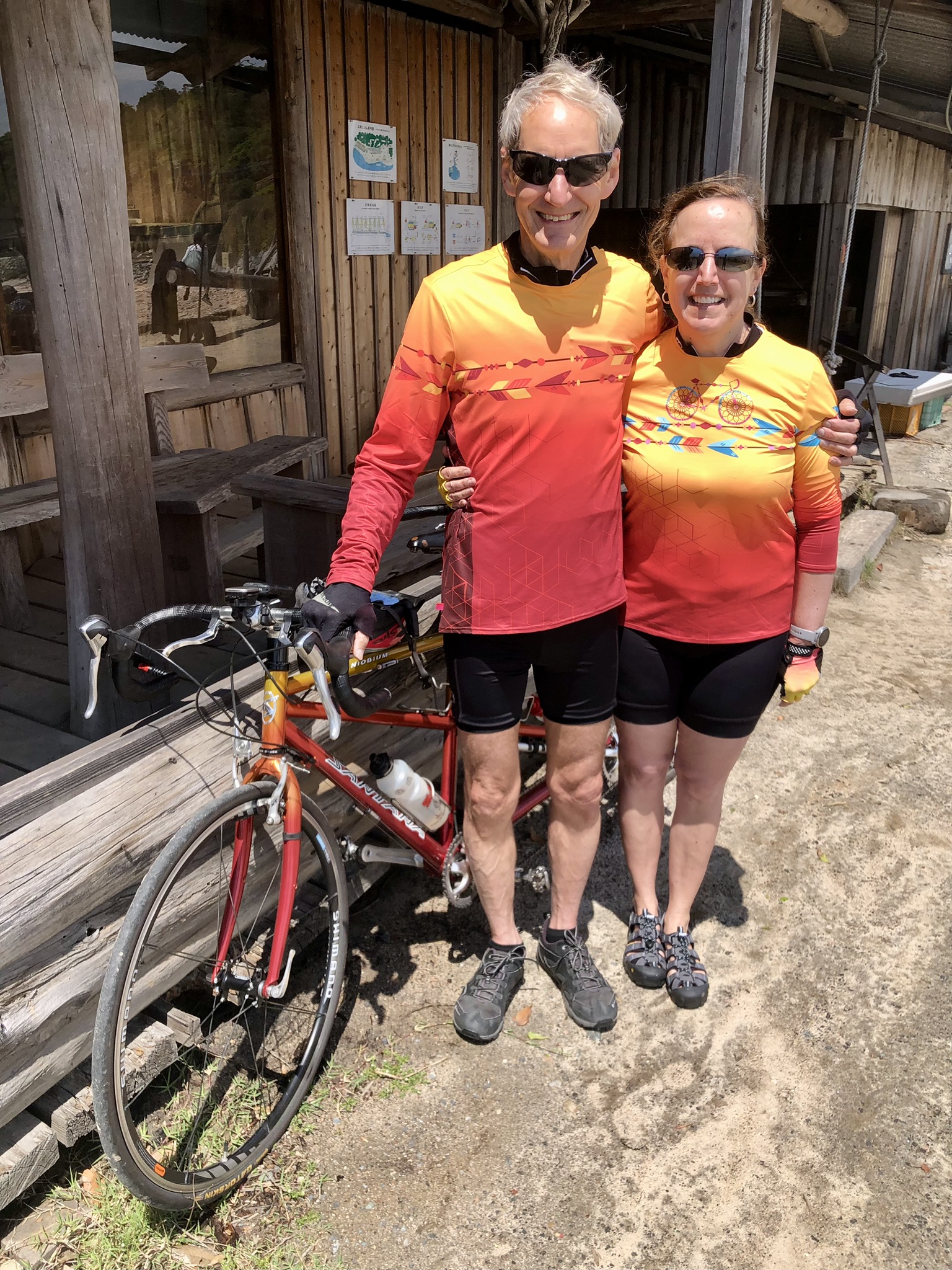
Wednesday, April 8, another sunny day
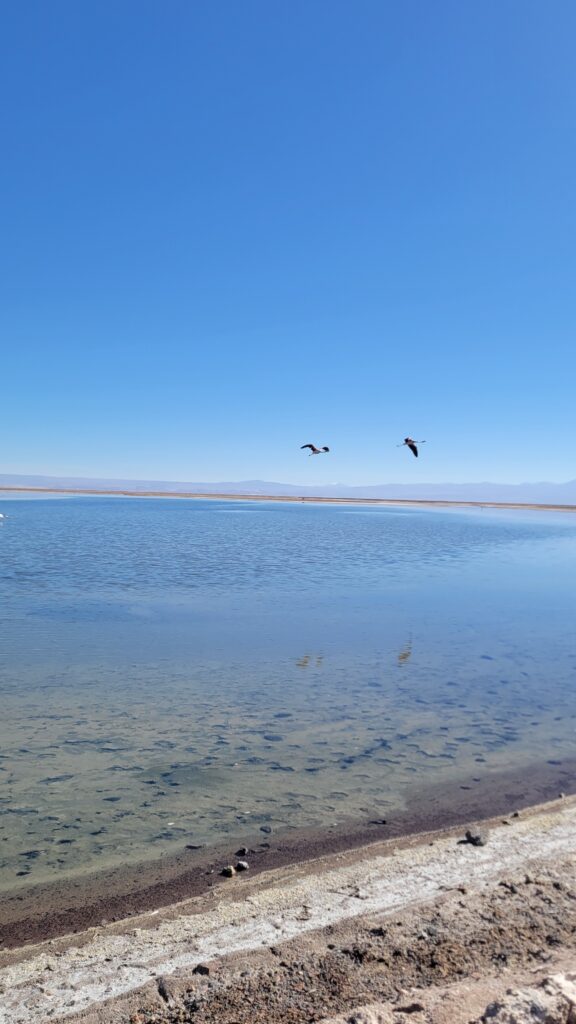
Today was a day spent at about 4,200 meters above sea level. First, we visited the salt flats where we saw flamingos feeding.
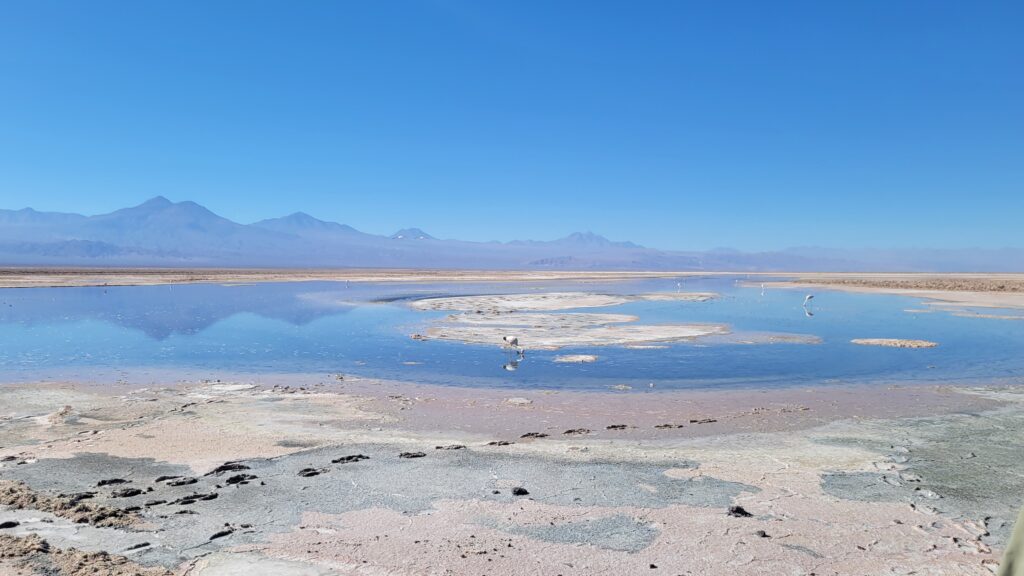
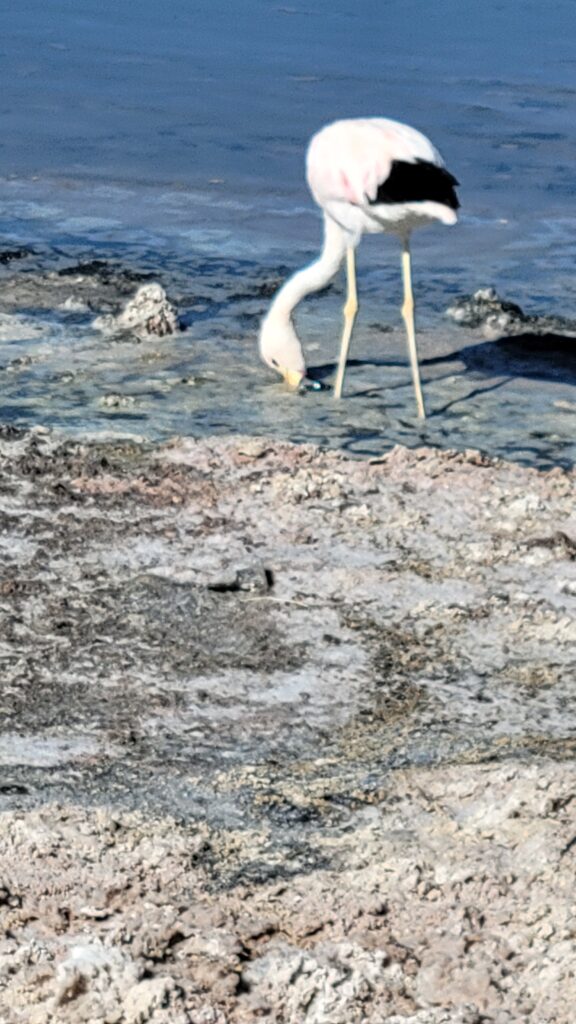
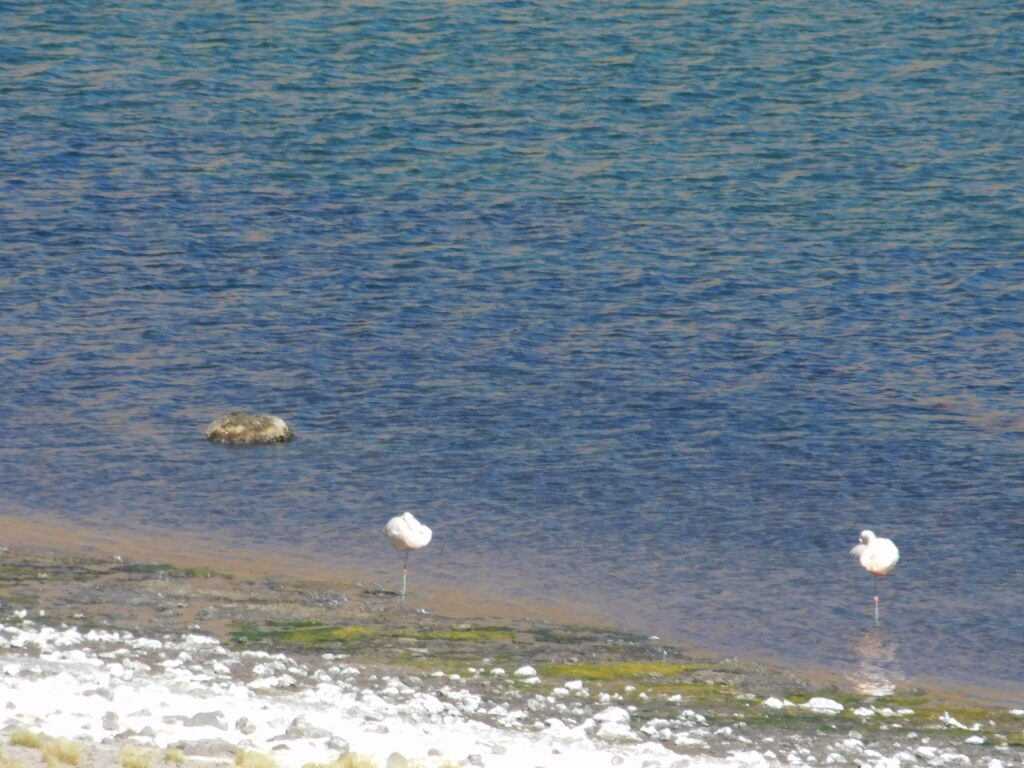
They feed 17 hours a day! There are three species of flamingos in the desert. We saw only two of the species here. The Chilean Flamingo (it has pink tailfeathers and pink knees and feet).
The Andean Flamingo has black tailfeathers and yellowish legs. The one below is a younger flamingo that hasn’t yet turned mostly pink.
In this area, the flamingos make their nests out of the salt “mud.”
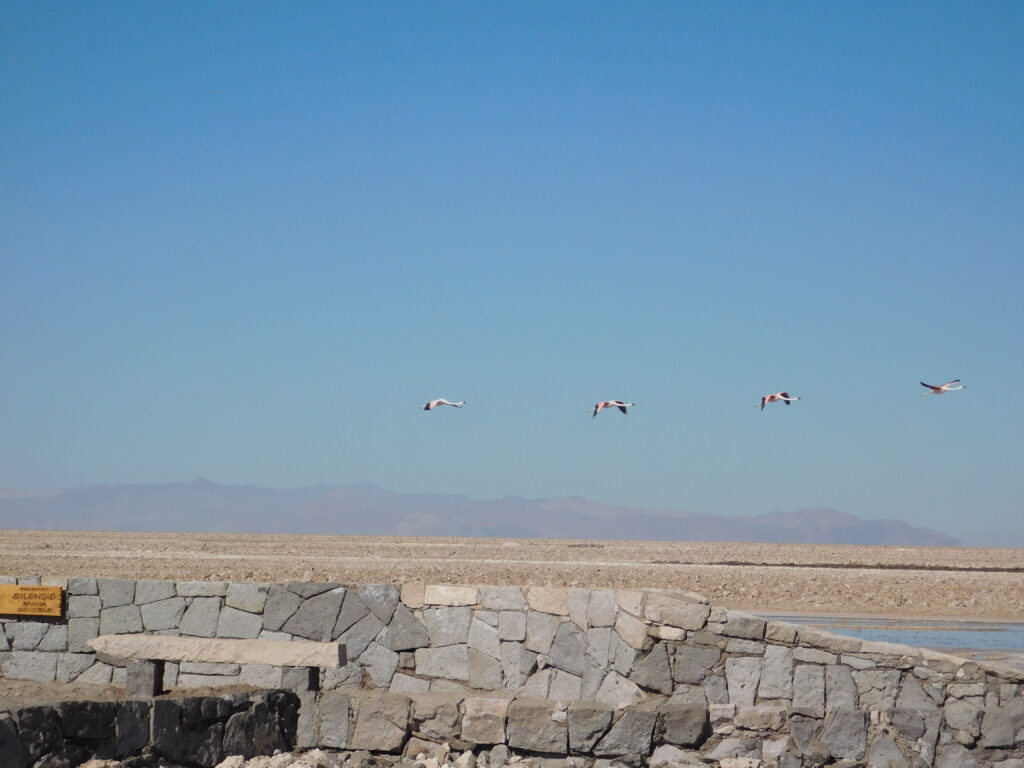
We captured a few flamingos in flight.
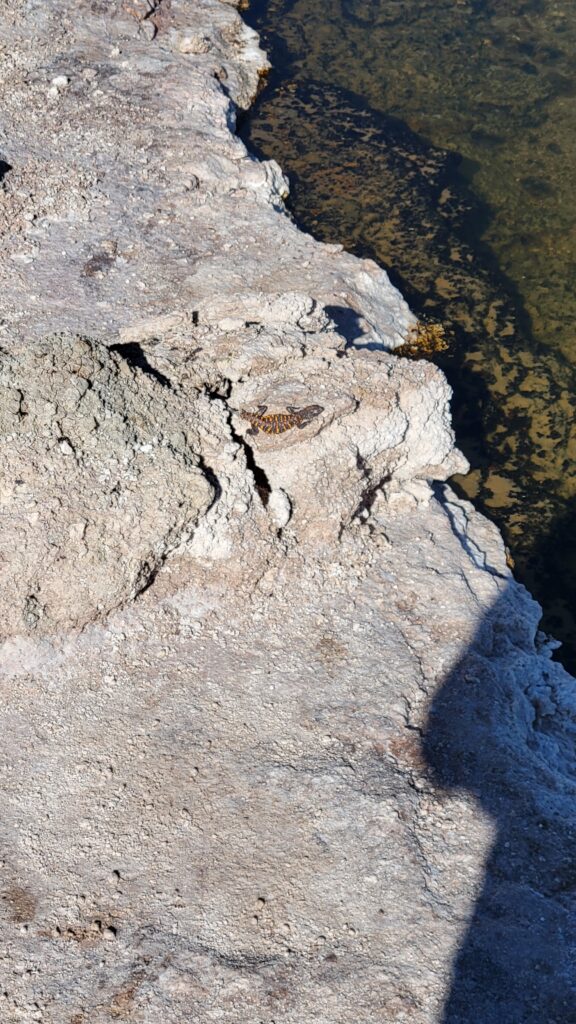
We also saw a little tiger lizard (my name, not necessarily his).
Following our visit to the salt flats, we went to a place our guide called “red rocks.” It was also a beautiful turquoise lagoon surrounded by mountains.
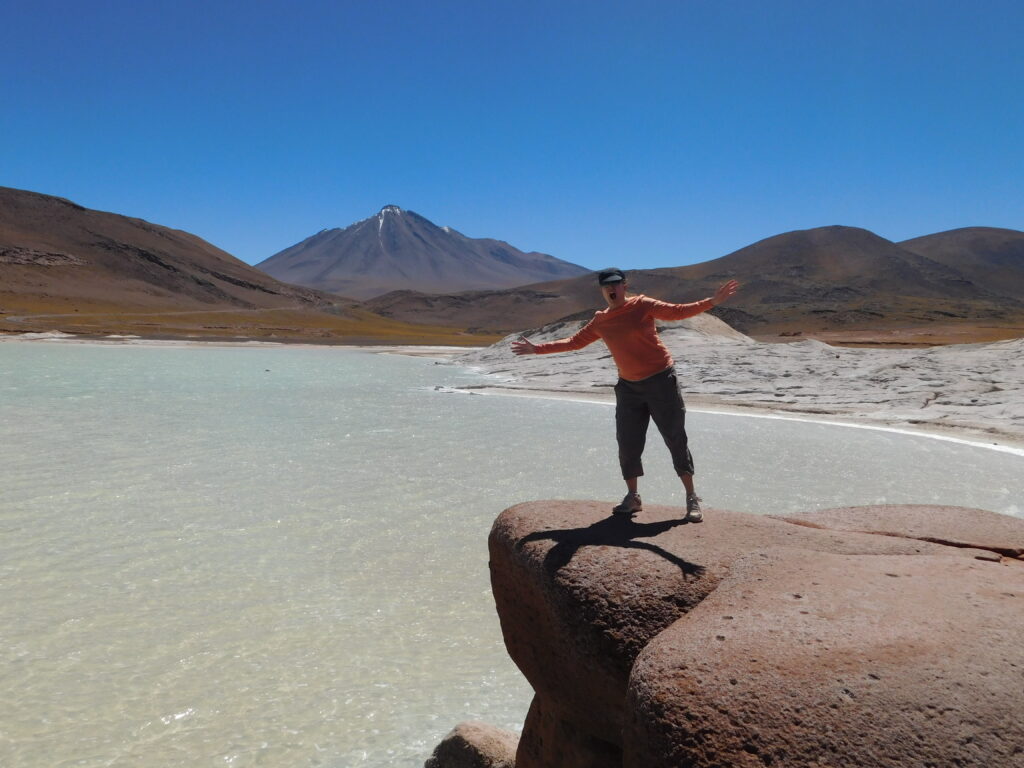
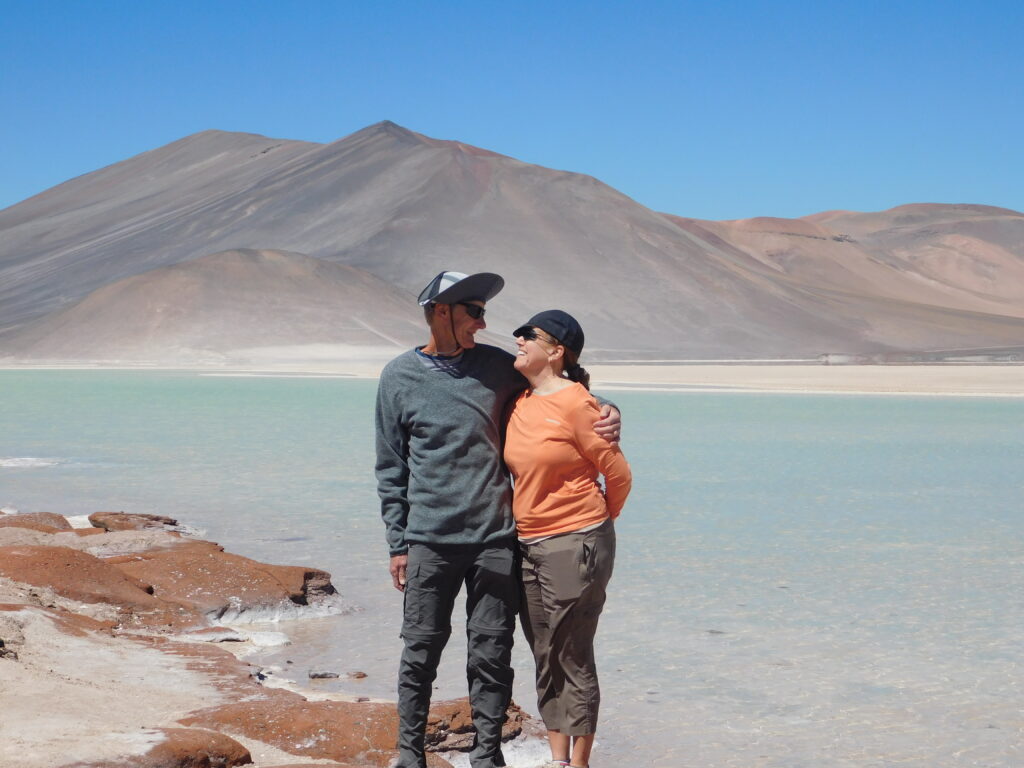
It is another place with not much vegetation.
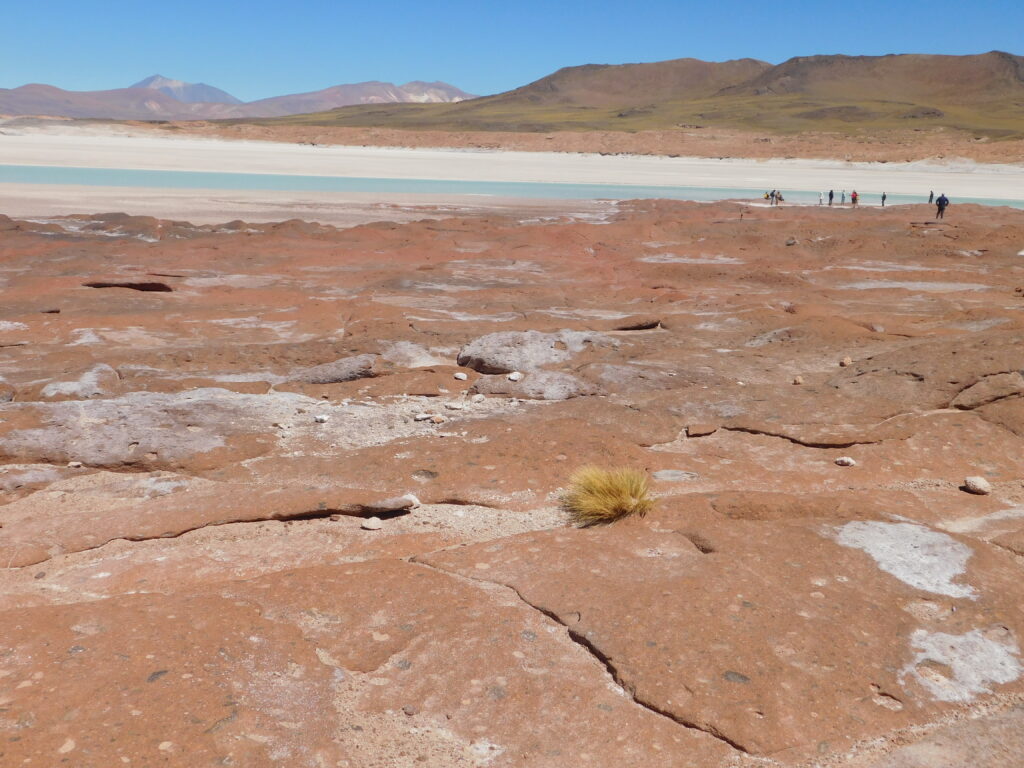
As we were leaving the red rocks park, we saw a Viscacha sunbathing outside his den. It is a rodent to the residents of Atacama. See if you can spot him in the photo below.
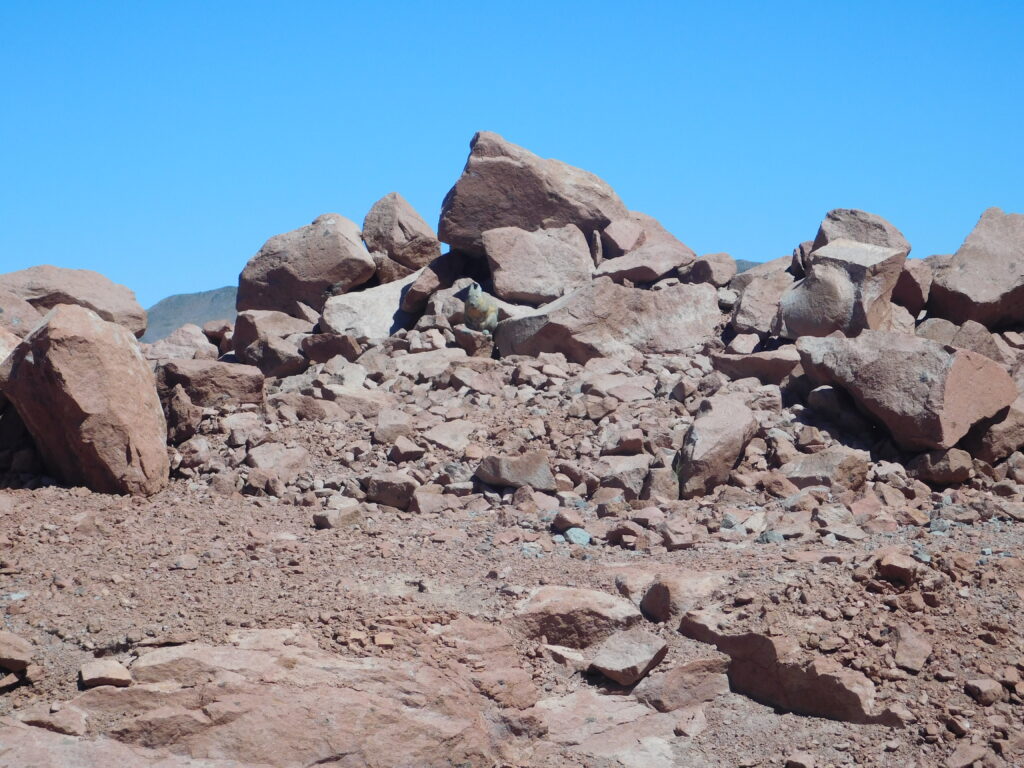
We passed some llamas along the road.
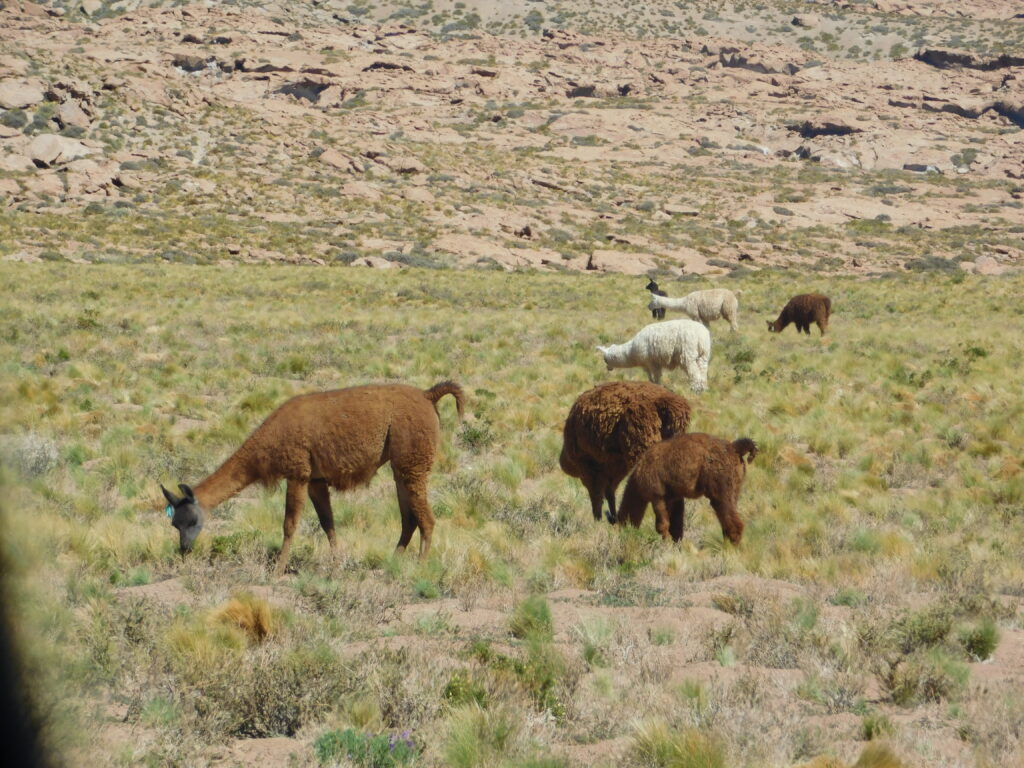
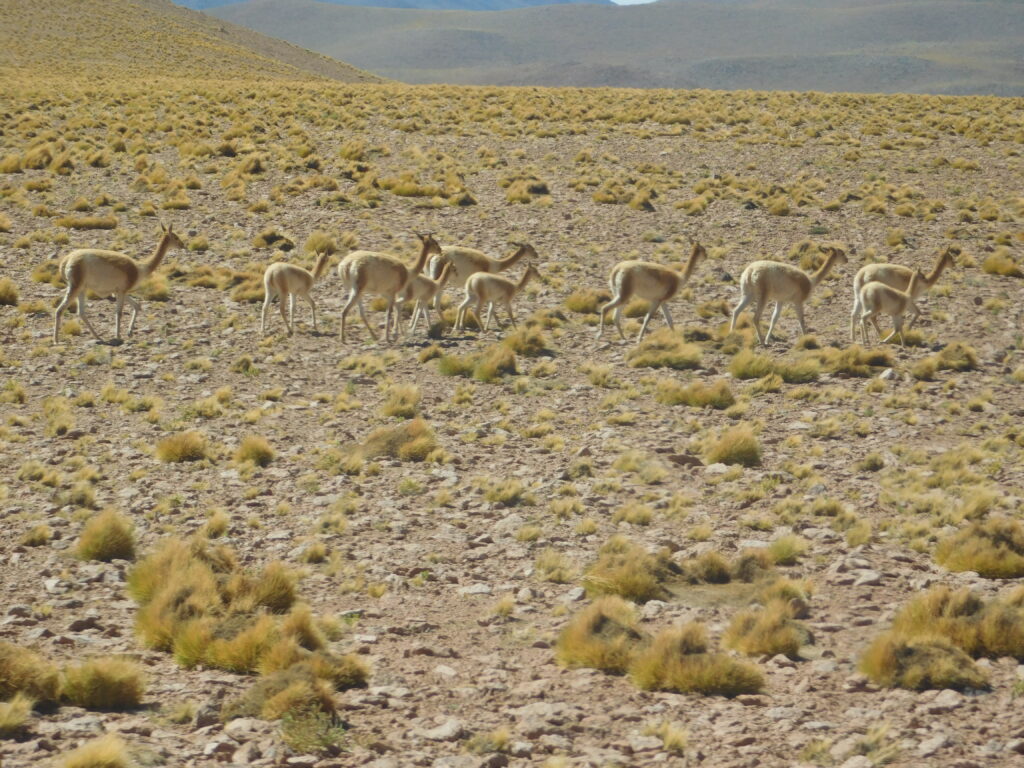
We also saw vicuna, their wild ‘cousins.’
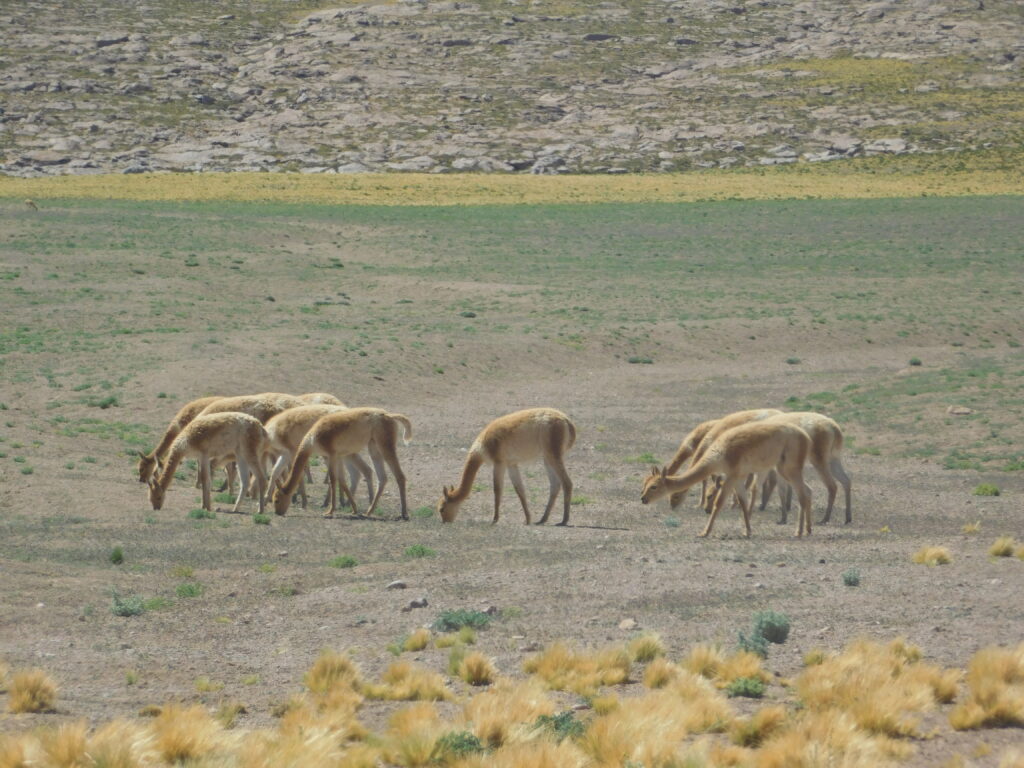
The photo below shows the harem of seven females and their young to one single male – out in front and out of the picture.
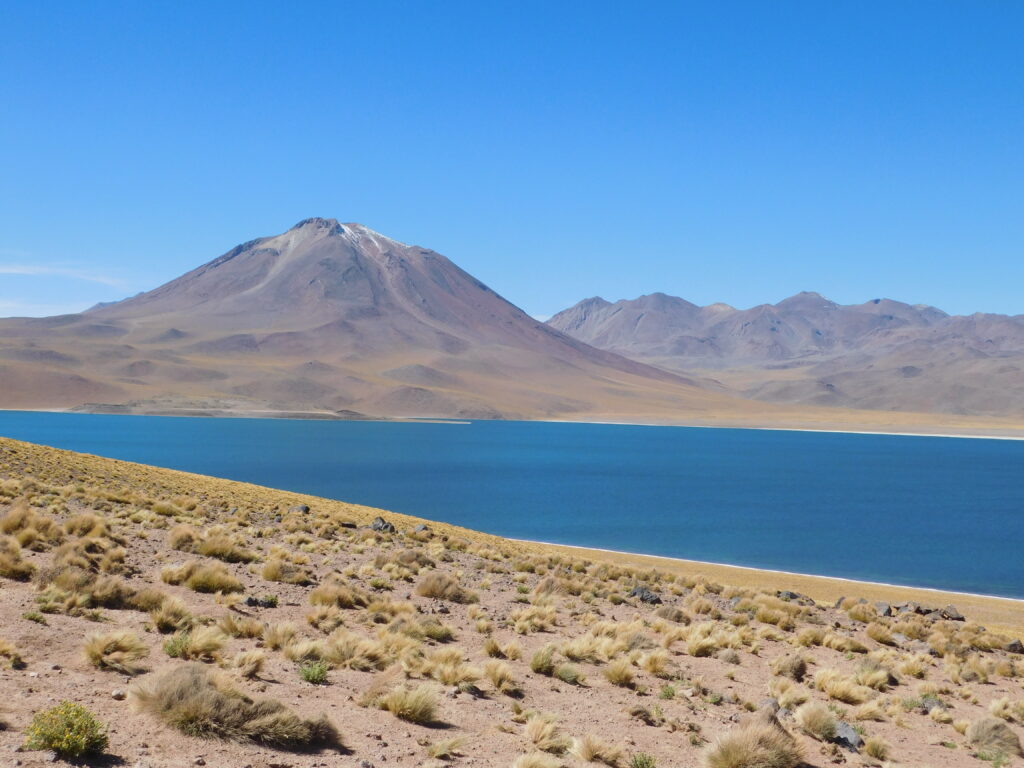
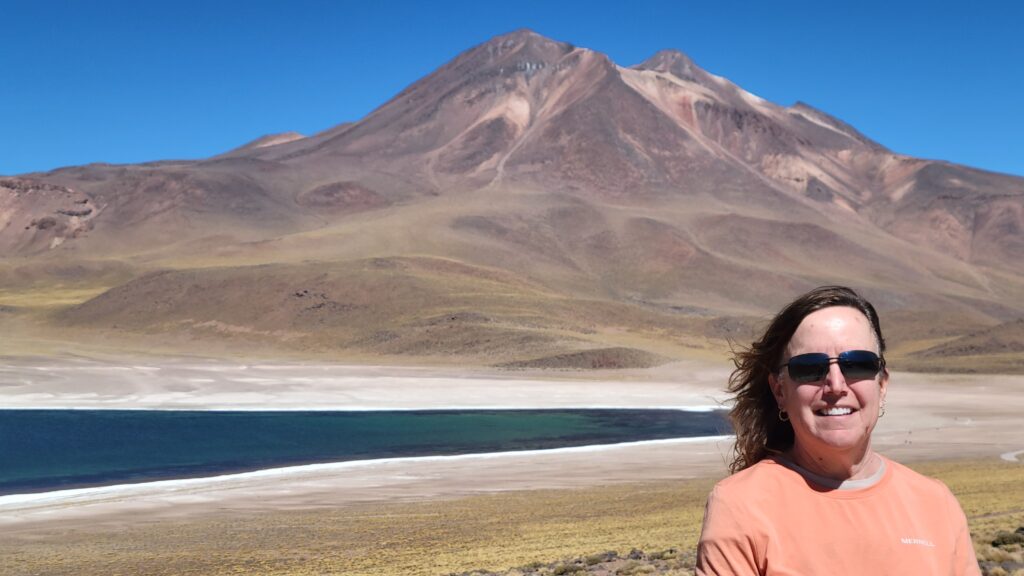
We stopped at the high lagoons – Miscanti and Meniques.
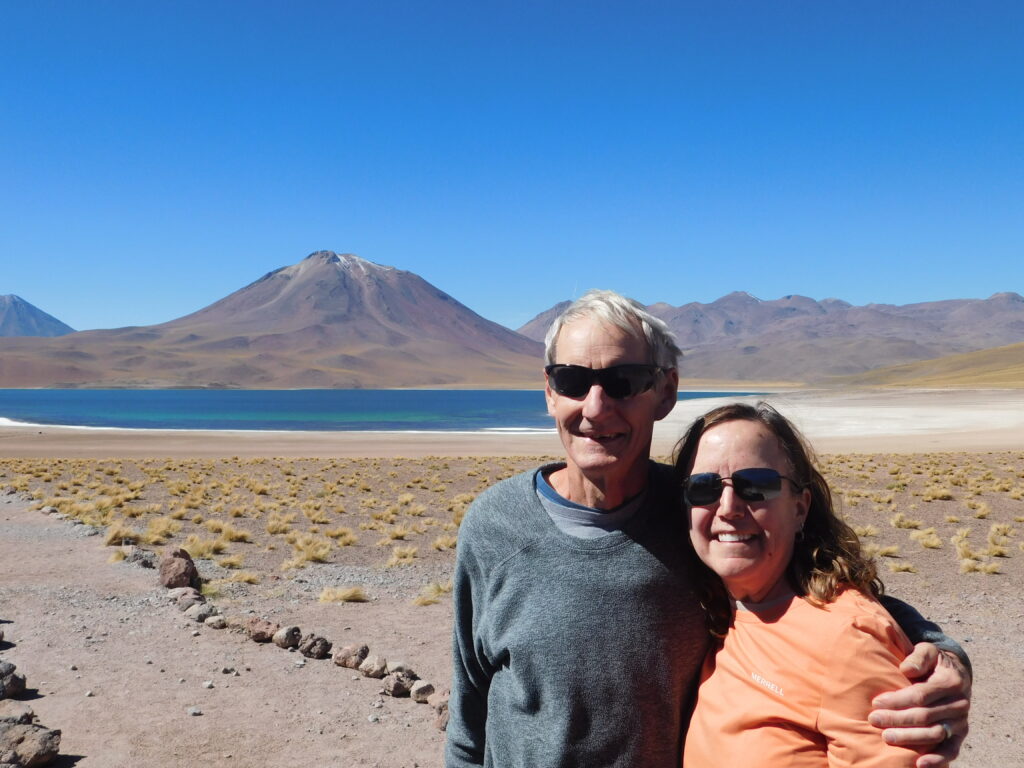
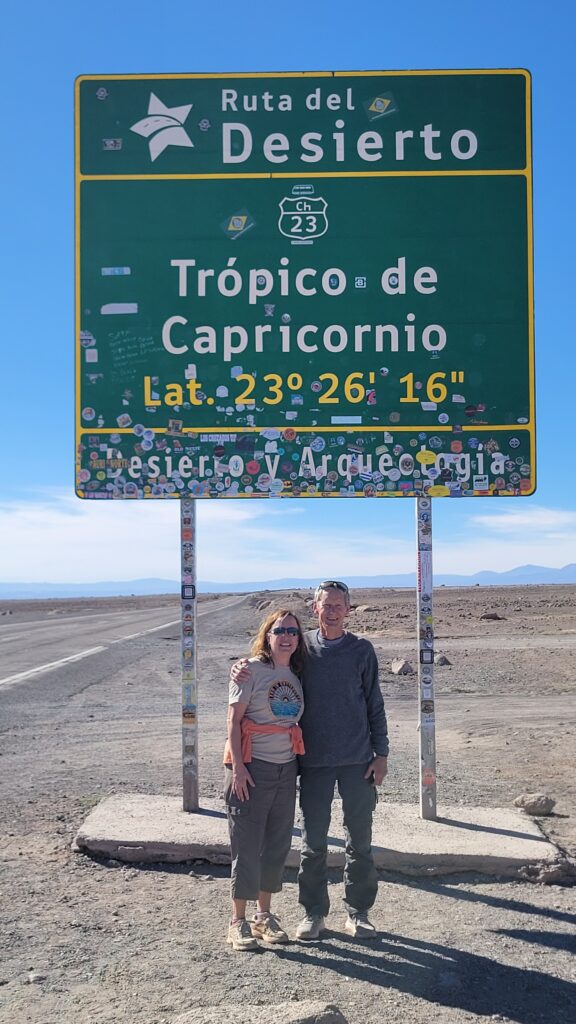
On our way to Tonocao for a very late lunch, we stopped at the Tropic of Capricorn to commemorate our passing of the landmark.
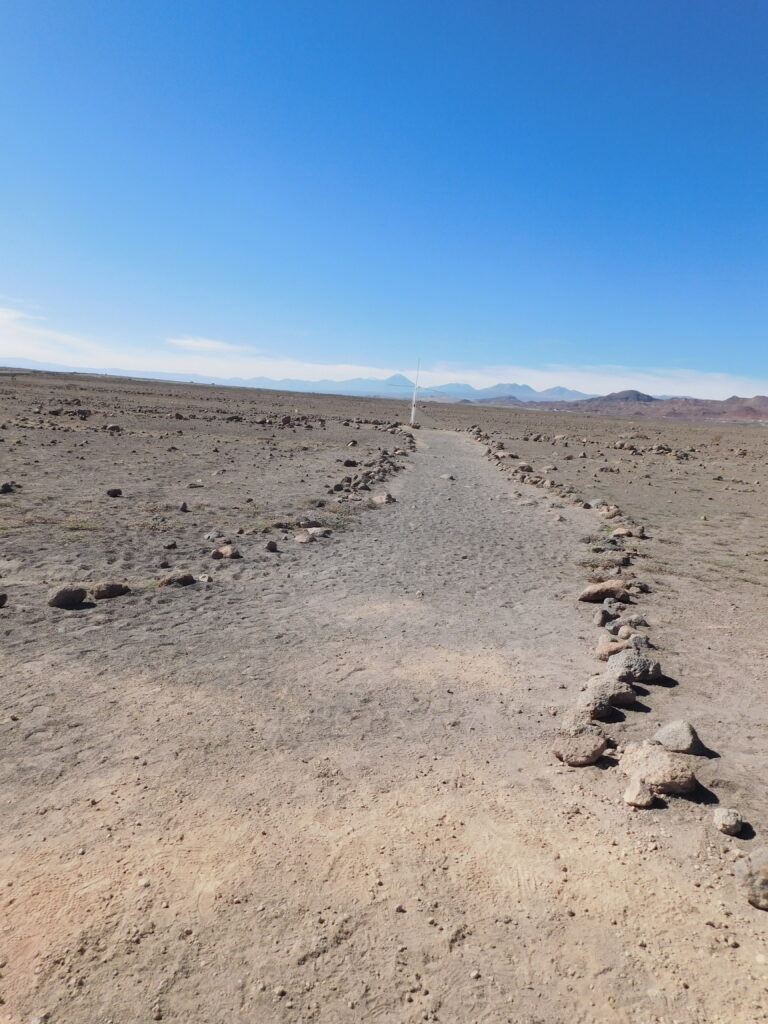
At that stop, we also saw the path of the Incas…
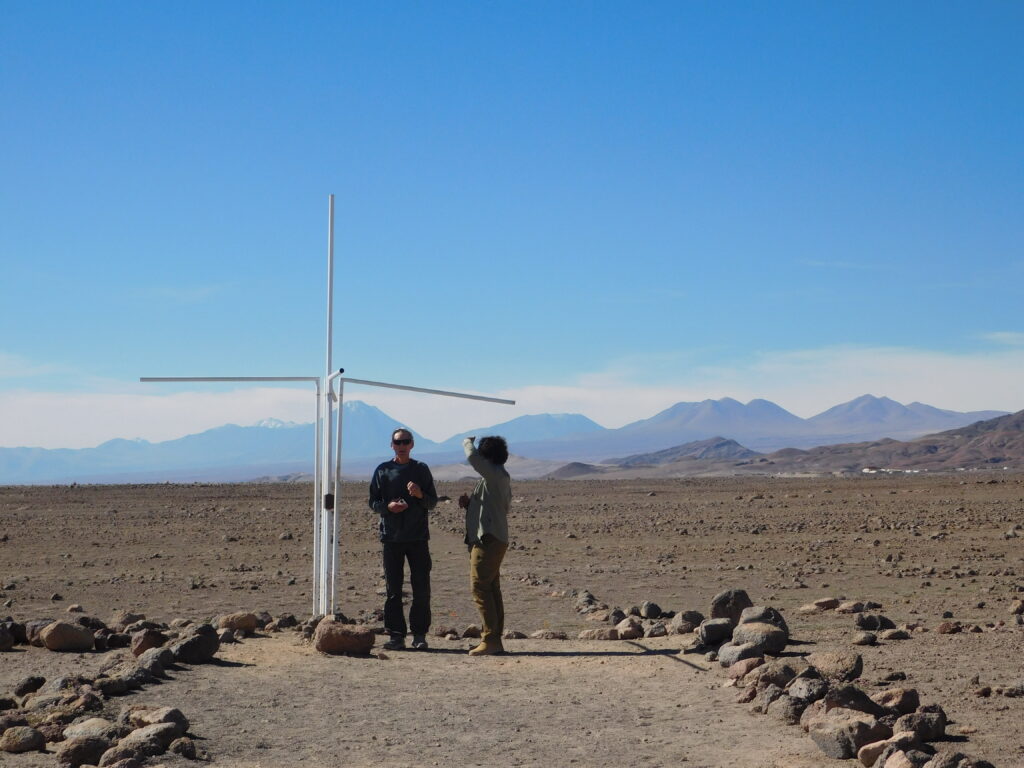
I am not convinced that the rocks lined the path in the days that the Incas traveled through the area.
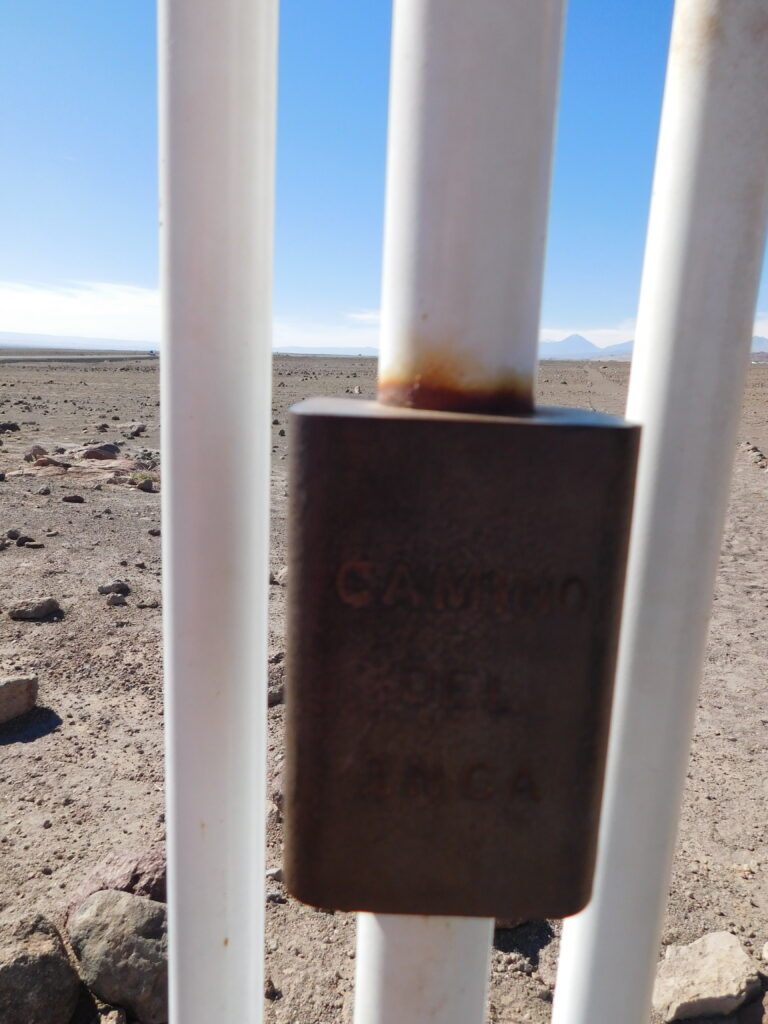
The sign was proof. ha ha
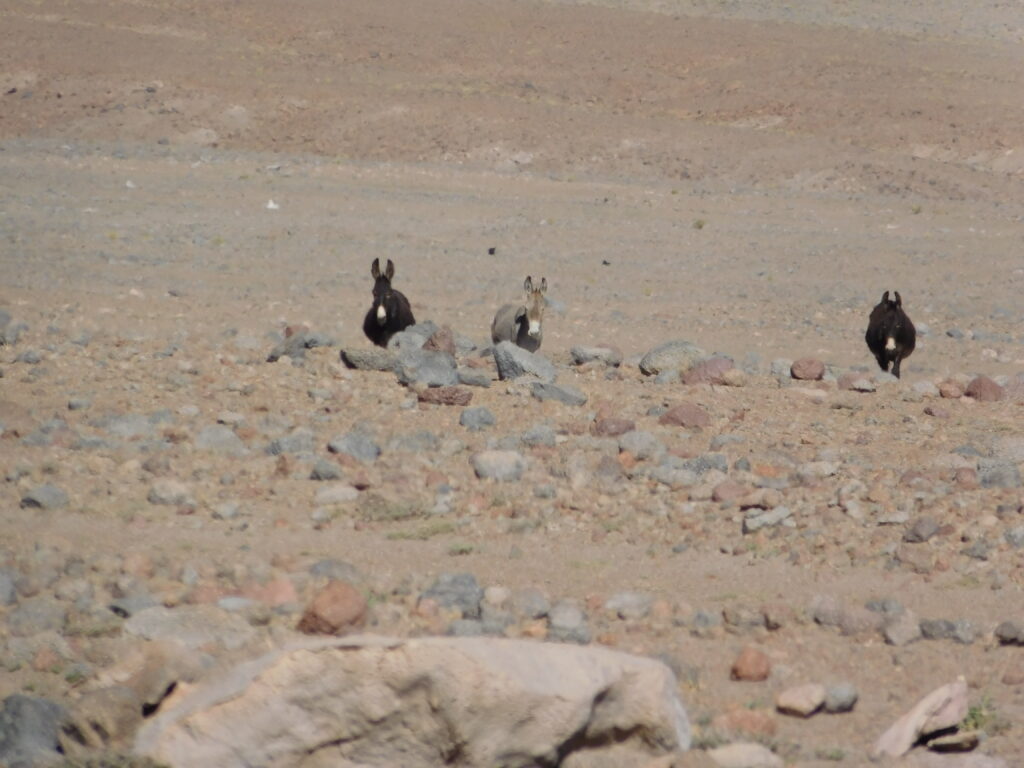
Wild donkeys anyone?
We also saw a few interesting old churches along the drive today.
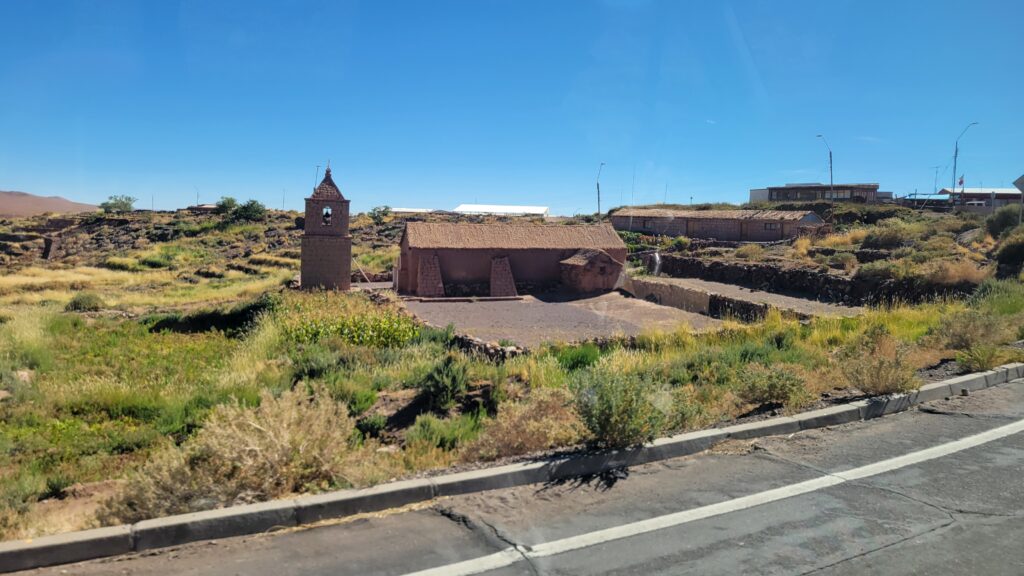
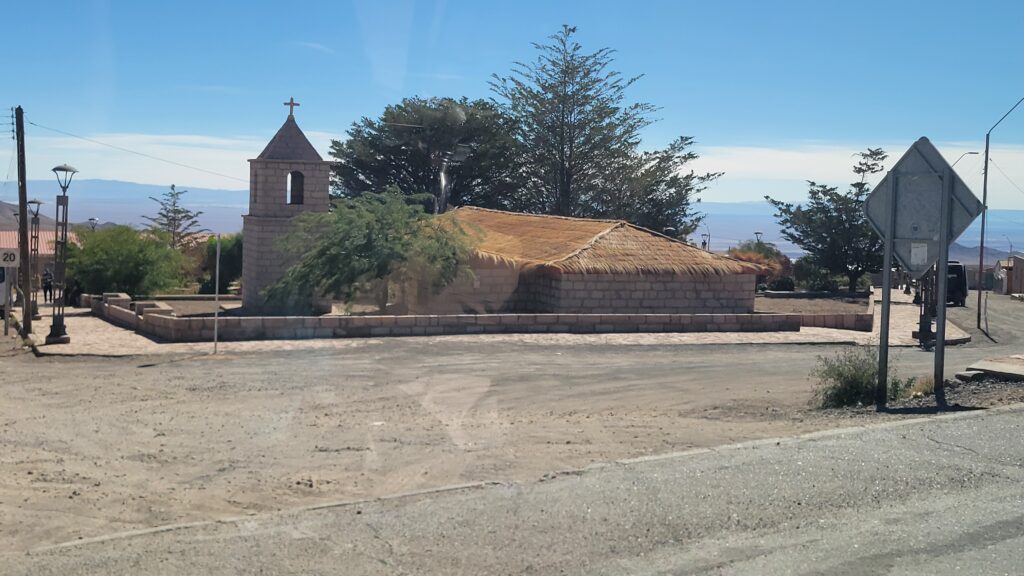
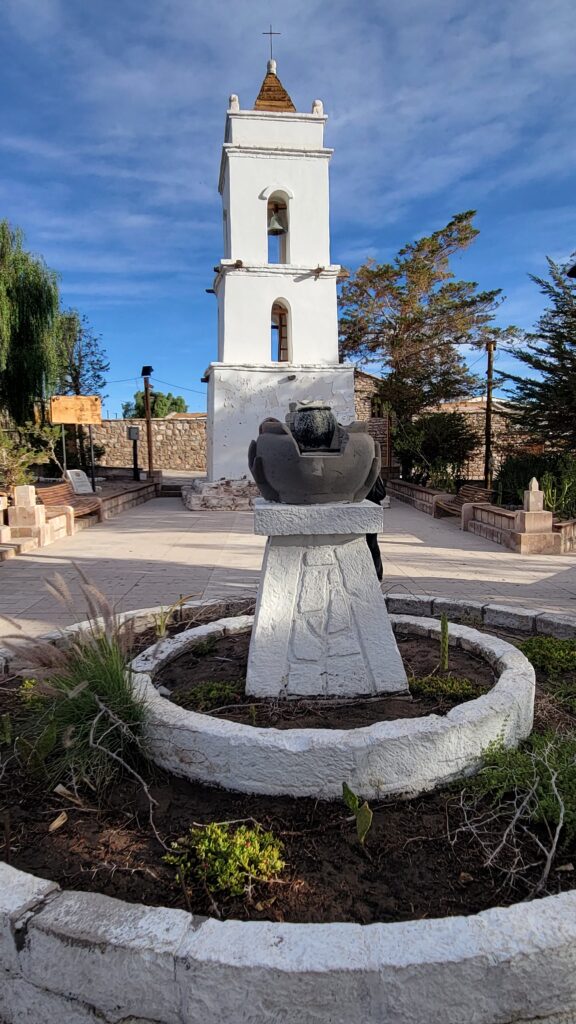
Including the church in Tonocao, which we looked inside after we had our 4 pm lunch. The bell tower is separate from the church building because of the fault line and potential for earthquakes.
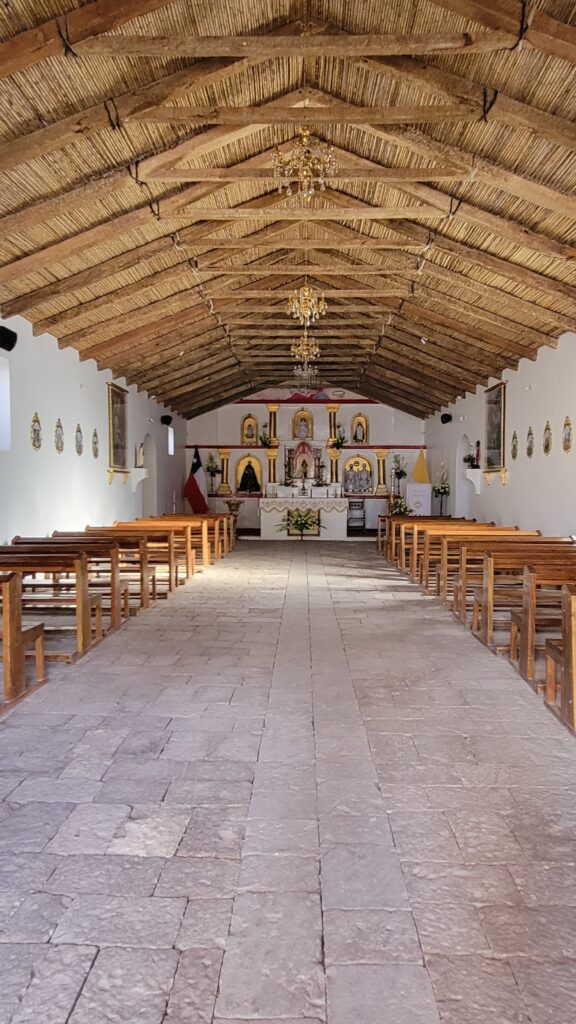
Our guide told us that the figures over the altar get a change of clothing every season.
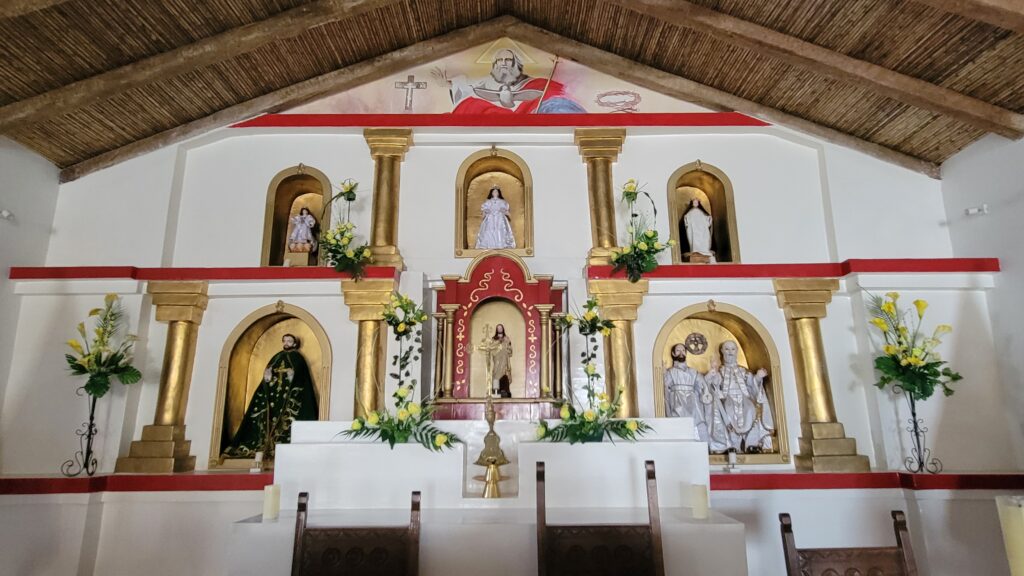
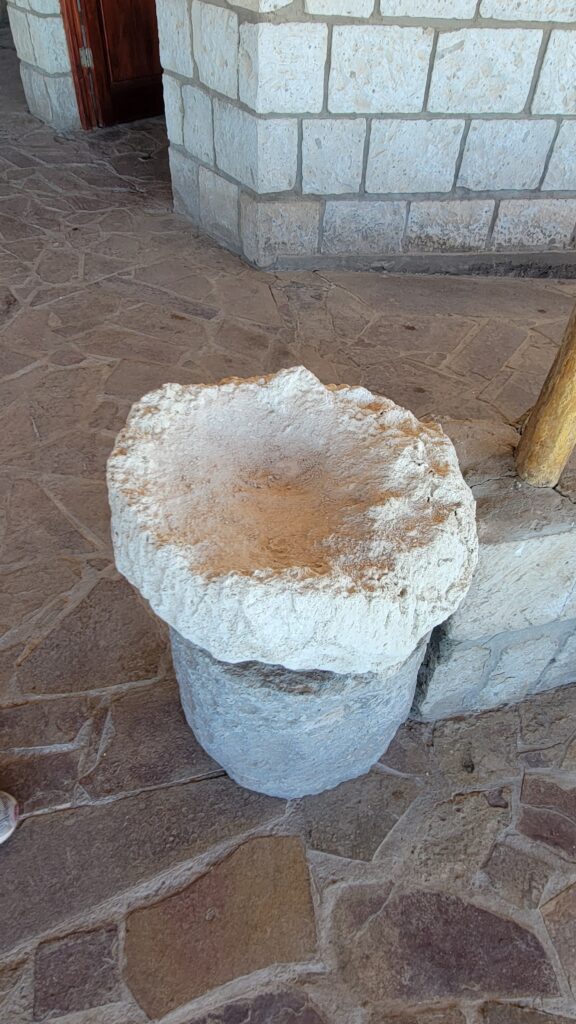
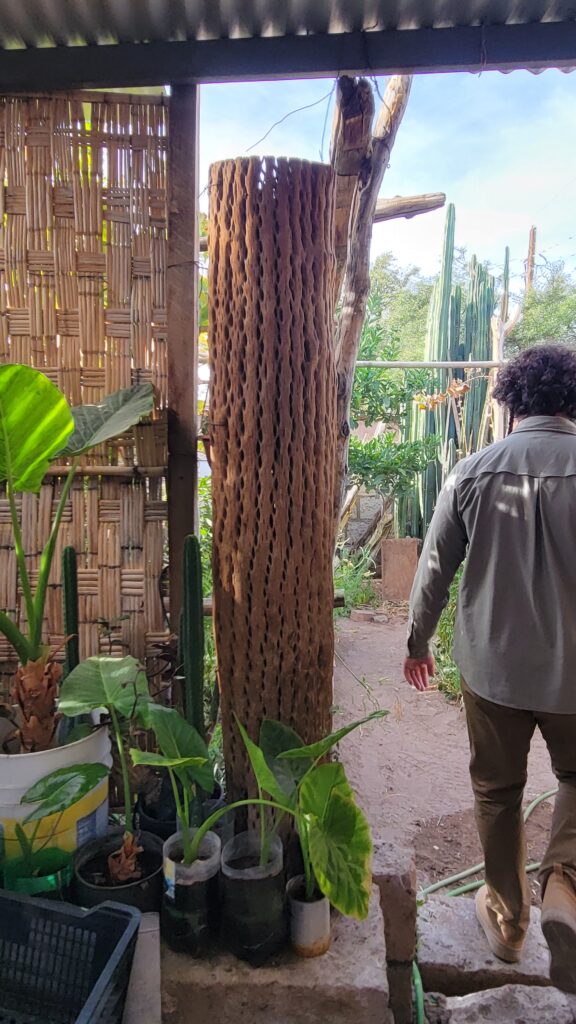
It is difficult to see in the photo of the inside of the church, but the ceiling is partially made of cactus wood. The cactus looks like a saguaro, but the center is wood like the post below.
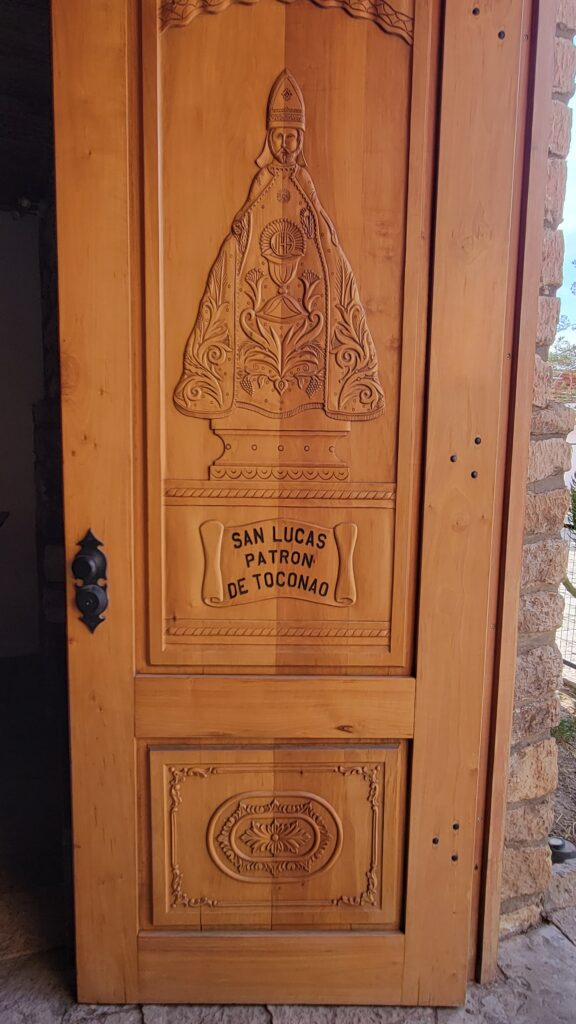
The doors of the church were well-carved for such a small village. They must have been imported.
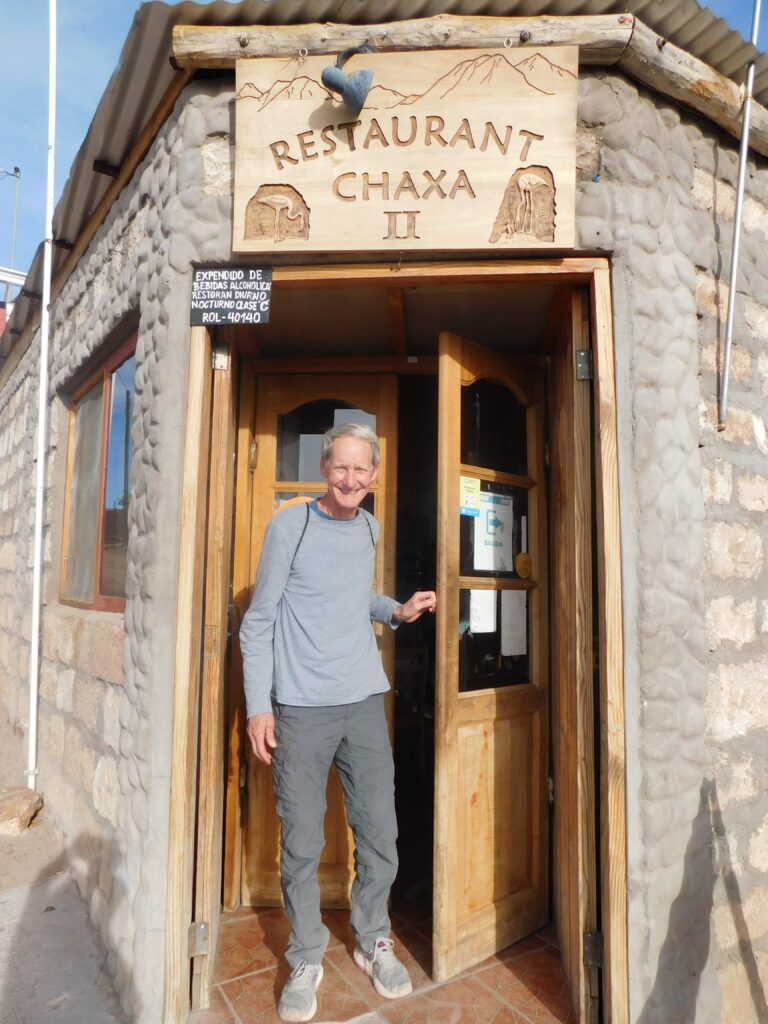
Our lunch was at an authentic restaurant in Toconao and in case you ever want to stop there – here is the name and a picture of the door.
First course:
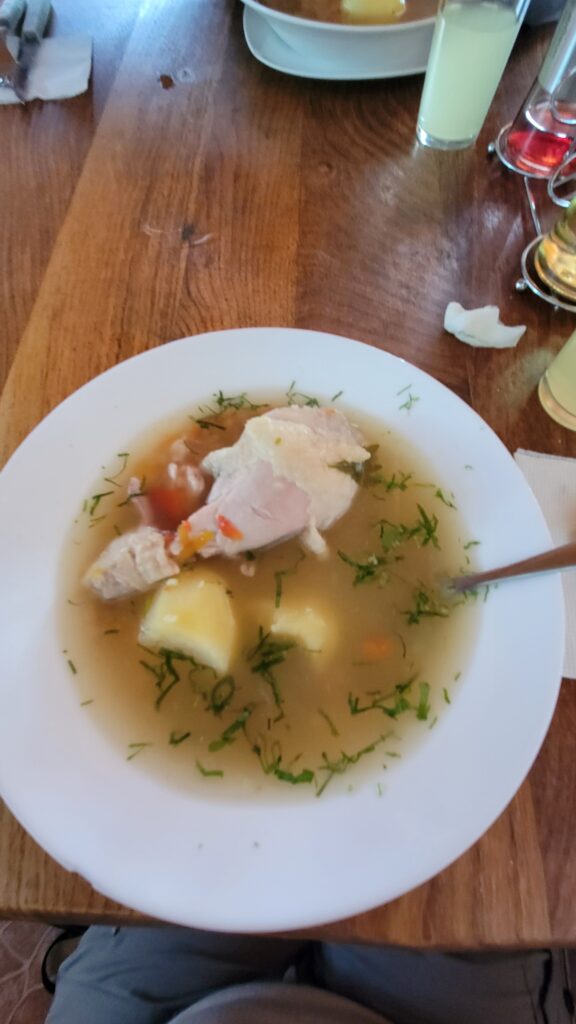
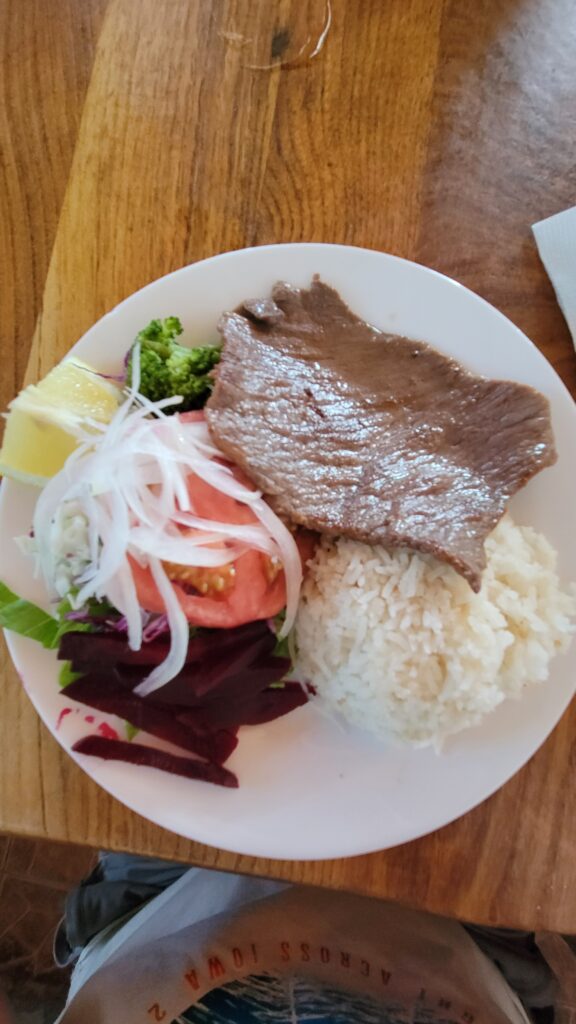
Main Course:
On our way back to San Pedro, we happened upon a tourist van with a flat tire and no spare, so we did our good deed of the day and told our guide to put the ten tourists in our van for the trip back to San Pedro. He seemed surprised that we would offer.
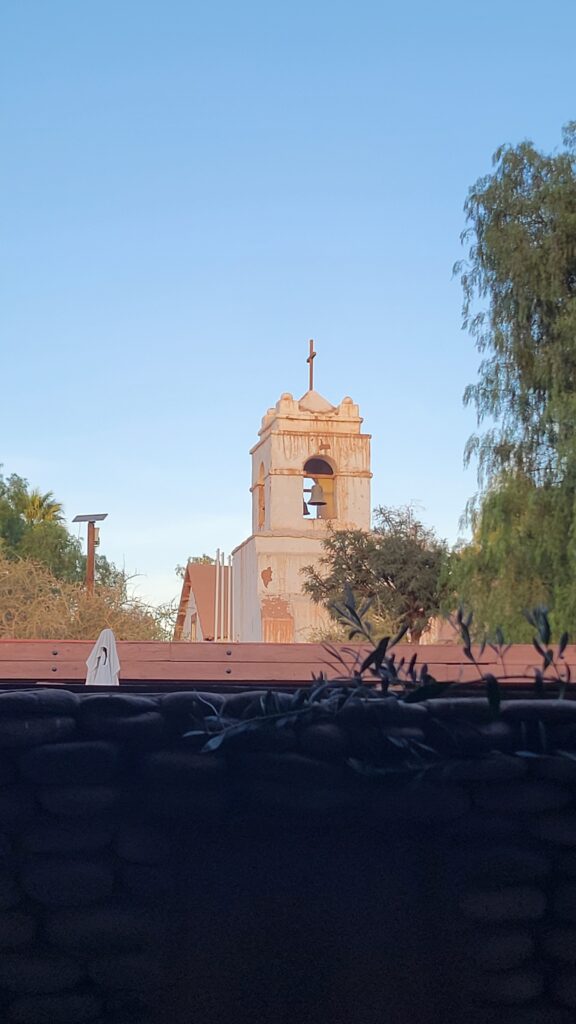
Back at our hotel, here is a view of the San Pedro cathedral from the garden patio.
Comments
4 responses to “A day at the salt flats and high lagoons”
Always ready to lend a hand! I bet you made their day!!!❤️
Ha ha – a young couple, indeed!
A witness for Jesus!
A witness for Jesus! You two look like a young couple there by the lagoon💕